Loading page...
Please wait...
Browse all articles tagged with "tariffs"

 News
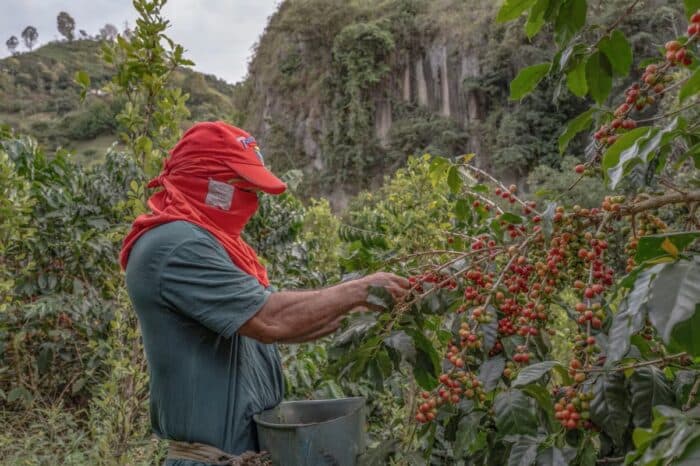
NewsNew York — Qahwa World CNN reports that hopes for lower coffee prices in the United States remain slim, despite the Trump administration’s recent signals about reducing tariffs on goods not grown domestically, including coffee. According to the network, Treasury Secretary Scott Bessent told Fox News that “substantial announcements” are expected in the coming days</p>
 News
NewsNew York – Qahwa World Coffee prices continued to decline on Monday as traders reacted to signs of a possible breakthrough in trade negotiations between the United States and Brazil. The downward movement follows a volatile week in which arabica and robusta futures hit multi-month highs before retreating sharply. Market optimism grew after Brazil’s President</p>
 News
NewsDubai – Qahwa World Throughout 2025, U.S. consumers have witnessed a steady rise in prices across nearly all goods following the administration’s decision to impose tariffs on imported products from global trade partners. Coffee has been no exception, even though the United States relies almost entirely on imported beans to satisfy domestic demand. Data shows</p>
 News
NewsDubai – Qahwa World Arabica coffee prices fell on Wednesday as forecasts of rainfall in Brazil’s coffee belt and renewed trade discussions between Brazil and the United States triggered selling in the futures market. On the ICE exchange, December Arabica (KCZ25) dropped by –4.75 points (–1.19%), while November Robusta (RMX25) rose by +55 points (+1.23%).</p>
 News
NewsDubai – Qahwa World The global coffee market navigated a turbulent September as trade tensions, monetary policy shifts, and regulatory uncertainty reshaped investor sentiment and price dynamics. According to the International Coffee Organization’s (ICO) latest Coffee Market Report for September 2025, the sector was influenced by a combination of U.S. tariff policy, an interest rate</p>
 News
NewsDubai – Qahwa World The global coffee market witnessed a significant price surge in September 2025, marking one of the strongest monthly performances in recent years. According to the latest Coffee Market Report issued by the International Coffee Organization (ICO), the ICO Composite Indicator Price (I-CIP) averaged 324.62 US cents per pound, representing a 9.3%</p>
 News
NewsDubai, September 18, 2025 – (Qahwa World) – Global coffee markets faced a sharp downturn on Wednesday as prices tumbled amid forecasts of long-awaited rainfall in Brazil, the world’s largest coffee producer. December arabica futures (KCZ25) closed down -33.70 cents, a steep -8.23%, marking a one-week low. November ICE robusta futures (RMX25) also plunged by -331</p>
 News
NewsDubai, 15 September 2025 ( Qahwa World) – Coffee, the world’s second most traded commodity after oil and a cultural staple for billions, is entering a critical stage in its global journey. The threats facing the industry are no longer confined to climate change alone. Increasingly, they include mounting supply chain disruptions and escalating tariffs that</p>
 News
NewsNew York, September 13, 2025 – Qahwa World –U.S. consumers are beginning to feel the full impact of the Trump administration’s sweeping tariffs, as new data shows prices rising sharply across a range of imported goods. The Consumer Price Index (CPI) climbed 2.9% in August compared to a year earlier, marking the fastest inflation rate</p>
 Reflections
Dubai, September 3, 2025 (Qahwa World) – While global coffee prices are falling due to heavy rainfall in Brazil and the near completion of the harvest, consumers in the world’s largest producer and exporter are facing the opposite reality: higher prices for roasted and instant coffee in the domestic market. December arabica futures fell 3.44%,</p>
 News
NewsDubai, August 27, 2025 (Qahwa World) – Coffee markets staged a sharp turnaround by Wednesday’s close, with both arabica and robusta futures rallying strongly as dwindling ICE inventories and tightening export flows outweighed harvest pressure from Brazil. The rebound highlights the volatility gripping global coffee trade, where supply constraints and policy shifts continue to drive</p>
